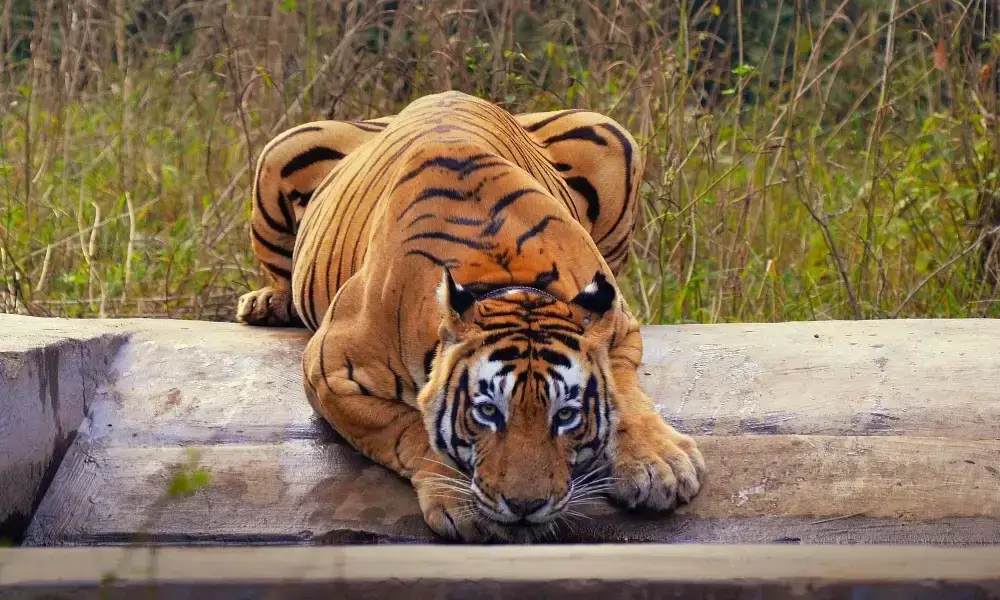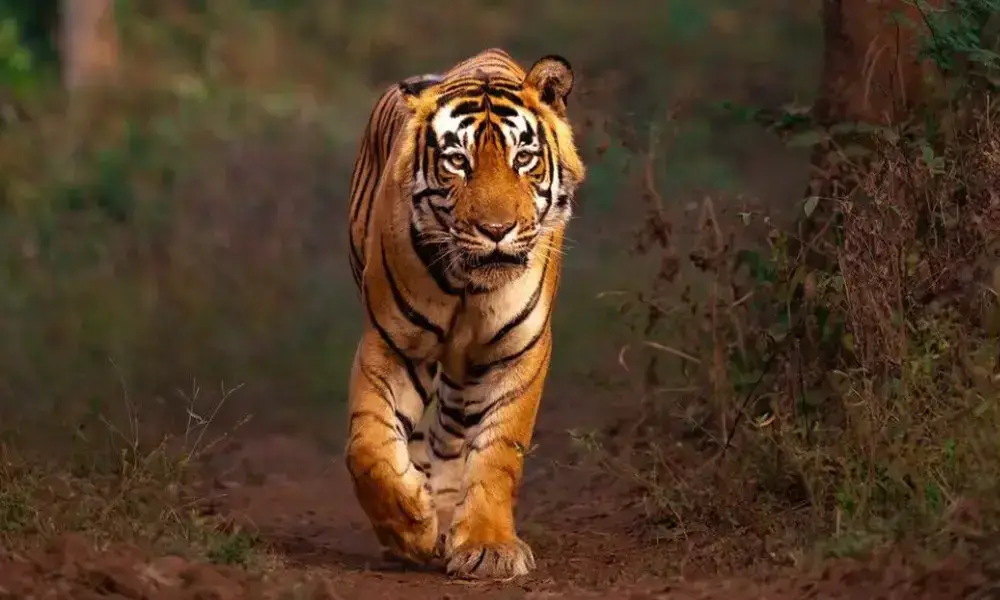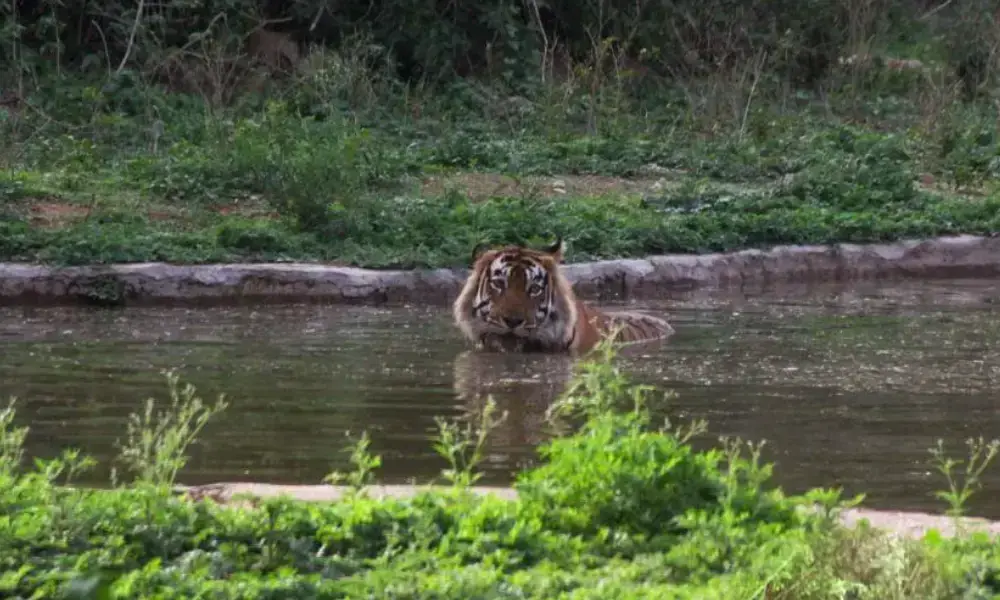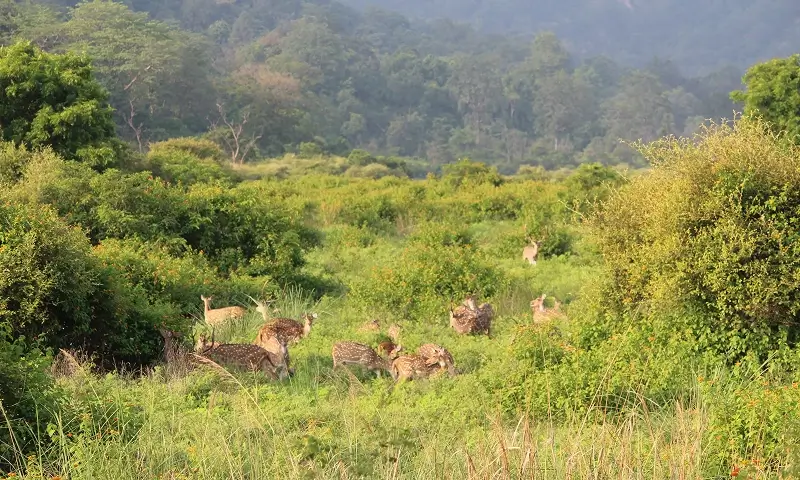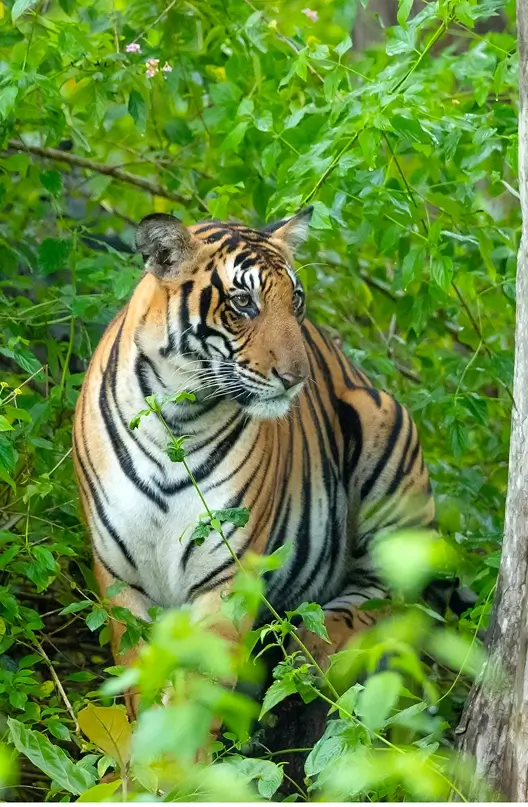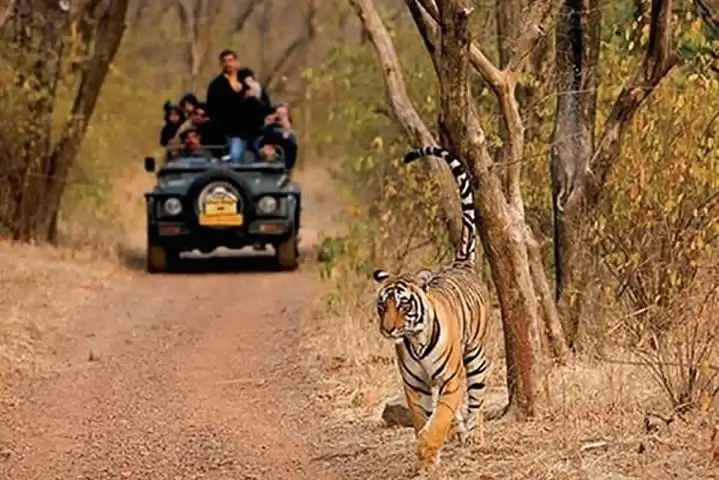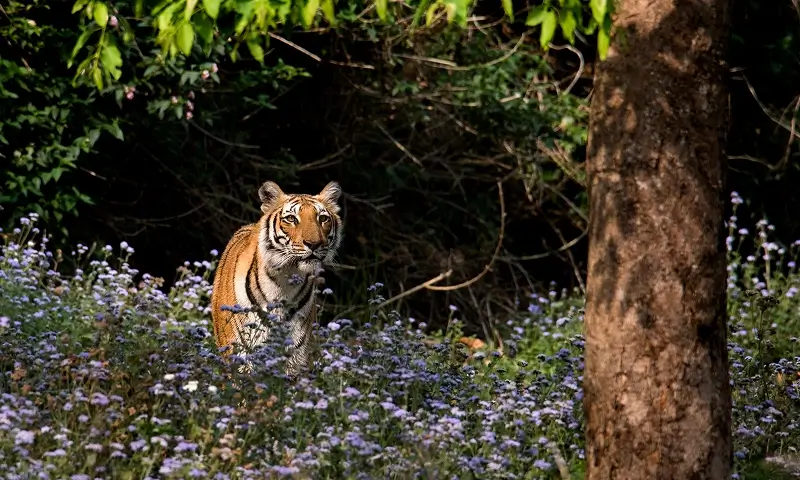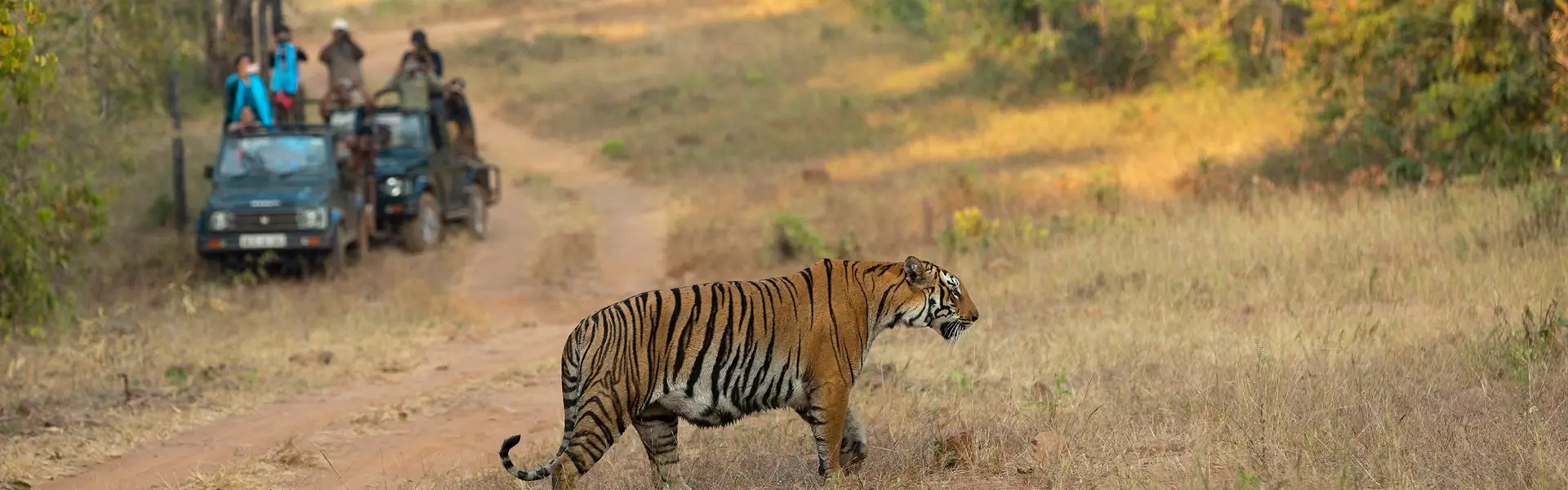
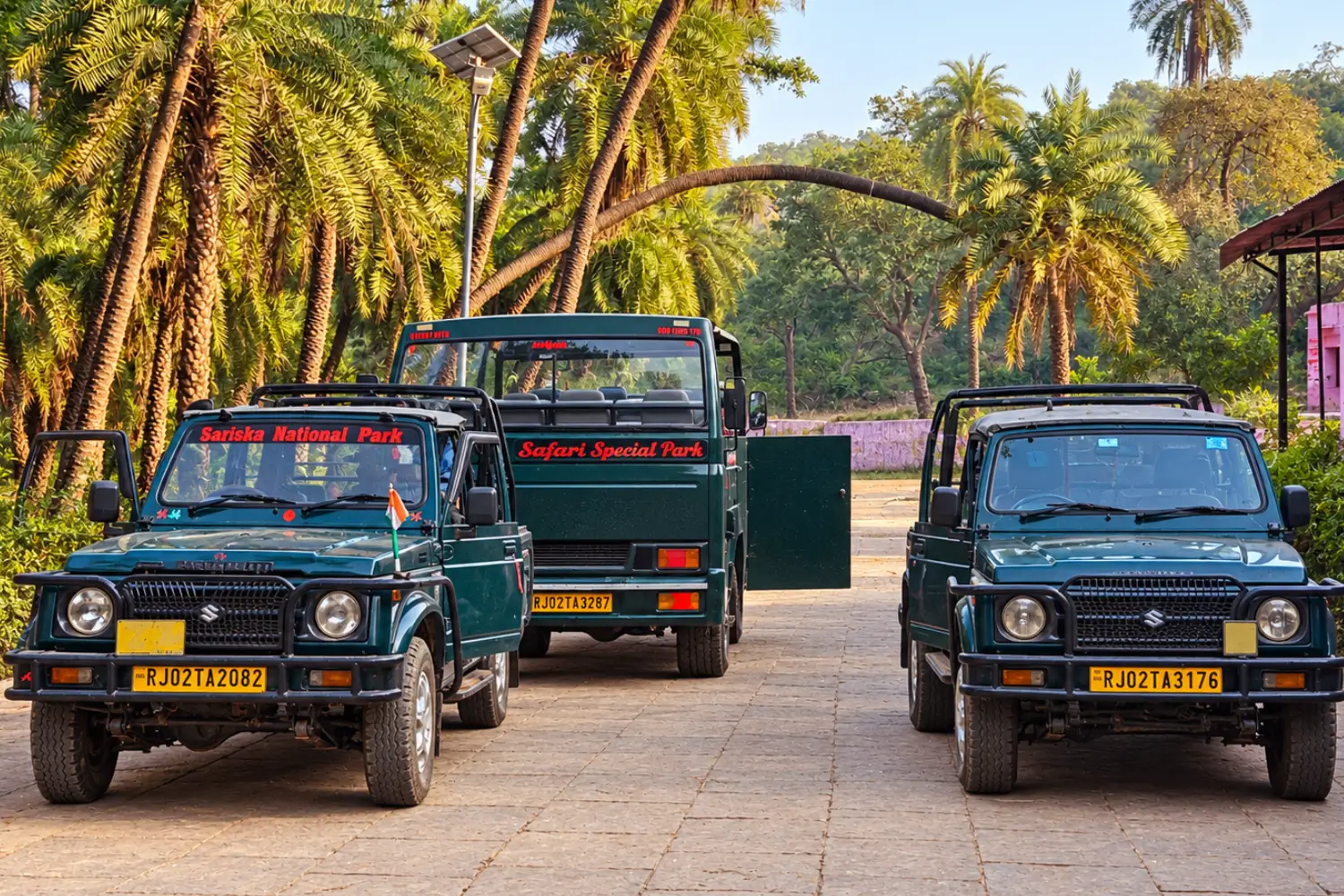
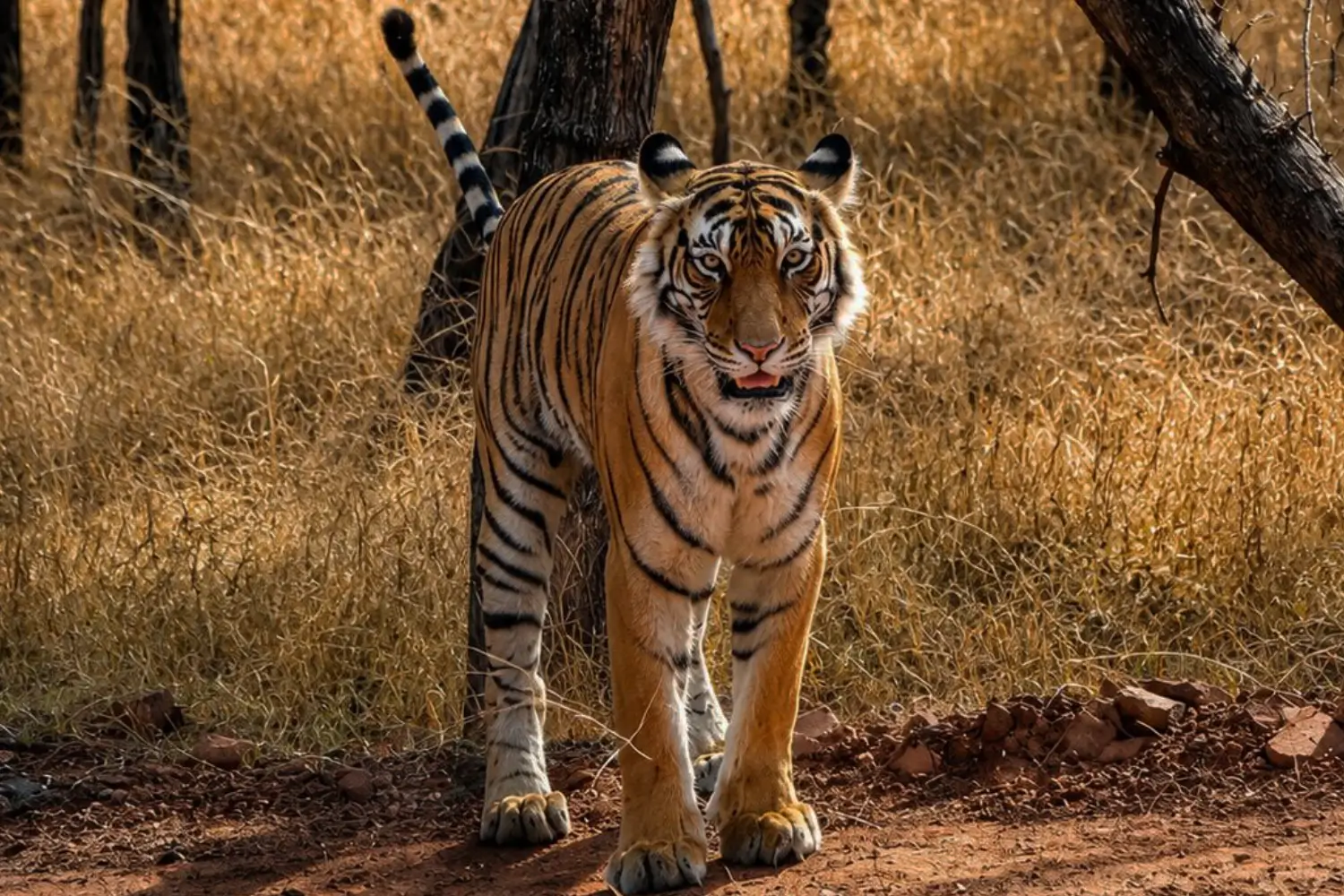
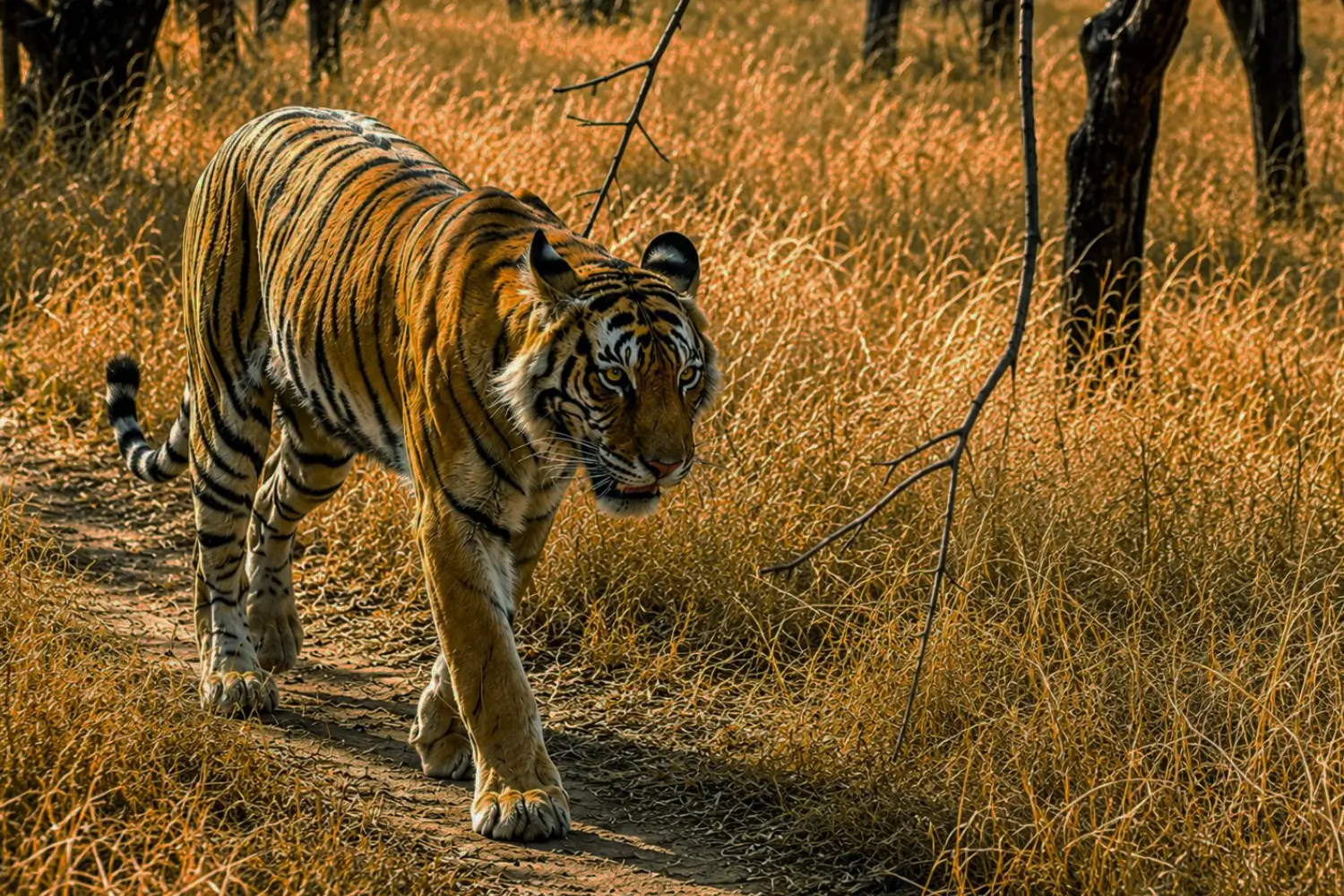
Sariska's safari routes are accessed through different entry points covering both core and buffer zones. The main core entry points are Sariska Gate and Tehla Gate, while Bara Liwari Gate and Bala Quila Gate provide buffer-area safari experiences.
Sariska Gate (Core Zone)
- Safari experience : The principal entry point for the core safari area, offering opportunities to observe Sariska's characteristic wildlife and forest scenery while the guide looks for signs of animal movement, tracks, and alarm calls.
- Landscape : Dry deciduous woodland, rocky stretches, grasslands, valleys, and water bodies.
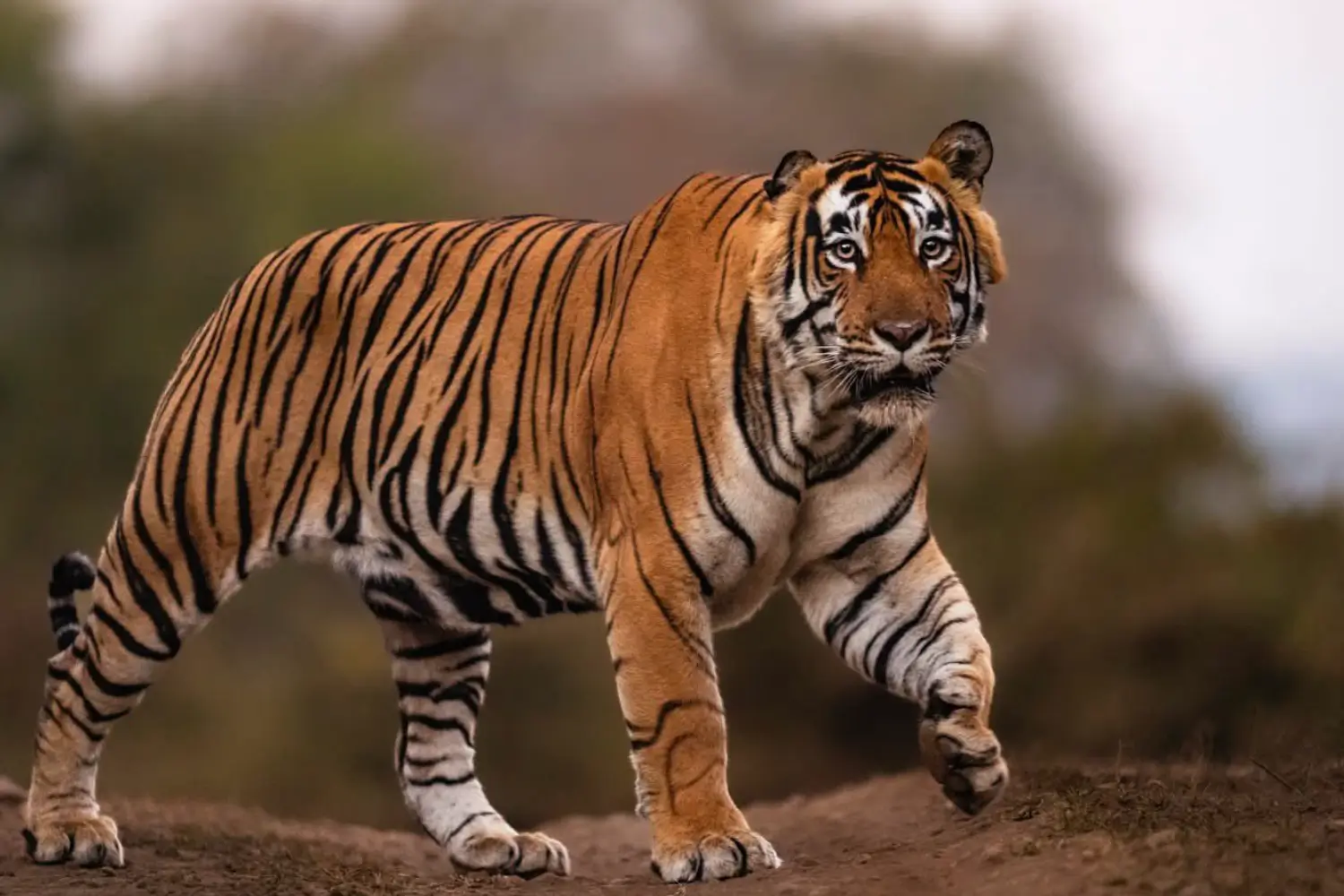
- Key wildlife : Bengal tiger, leopard, sambar, chital, nilgai, wild boar, striped hyena, jungle cat, langur, and a range of birdlife.
- Best suited for : First-time visitors, families, and travelers primarily interested in a core-area safari.
- Safari duration : 3 to 3.5 hours.
Tehla Gate (Core Zone)
- afari experience: SAnother access point to the core area, useful for visitors staying on the Tehla side or those wanting to explore a different section of the forest.
- Landscape: Dry deciduous forest, wooded valleys, rocky slopes, and open forest patches.
- Key wildlife: Bengal tiger, leopard, sambar, chital, nilgai, wild boar, hyena, langur, and several bird species.
- Best suited for: Wildlife enthusiasts, photographers, birdwatchers, and repeat visitors.
- Safari duration: 3 to 3.5 hours.
Bara Liwari (Buffer Zone)
- Safari experience: A buffer-zone safari on the Alwar side of Sariska, offering a quieter wildlife outing beyond the principal core routes and a useful addition to an Alwar itinerary.
- Landscape: Forest patches, open scrub, rocky terrain, and water points.
- Key wildlife: Sambar, chital, nilgai, wild boar, leopard, hyena, jackal, and birdlife.
- Best suited for: Families, birdwatchers, and visitors wanting a buffer-forest addition to their Sariska trip.
- Safari duration: 3 to 3.5 hours.
Bala Quila (Buffer Zone)
- Safari experience: A buffer-area safari around the forest landscape adjoining the historic Bala Quila fort, combining wildlife viewing with the rugged Aravalli setting.
- Landscape: Rocky Aravalli hills, forested slopes, elevated terrain, and scenic views around Bala Quila.
- Key wildlife: Tiger, leopard, sambar, nilgai, wild boar, hyena, jackal, and bird species.
- Best suited for: Photographers, nature lovers, repeat visitors, and travelers wanting to combine wildlife with Alwar's heritage.
- Safari duration: 2 hours.
| If Your Priority Is | Consider |
|---|---|
| First core-area safari | Sariska Gate |
| Exploring another core-area route | Tehla Gate |
| Buffer-zone wildlife experience | Bara Liwari |
| Wildlife combined with heritage and Aravalli scenery | Bala Quila |
| More than one wildlife experience | Combine a core safari with a buffer safari |
Tip : If your primary objective is to look for tigers, a core-area safari through Sariska or Tehla Gate is the more suitable choice. Buffer safaris at Bara Liwari and Bala Quila offer a different experience centered on the wider forest landscape.
Sariska safaris run in two vehicle formats. Both follow the same rules, but the experience differs.
| What Matters | Jeep (Gypsy) Safari | Canter Safari |
|---|---|---|
| Group size | Up to 6 visitors | Up to 20 visitors |
| Flexibility | Quicker to reposition, quieter drive | Slower, less personal experience |
| Terrain handling | Agile across rocky Aravalli tracks | Better on wider forest routes |
| Seat height | Closer to ground level | Elevated, wider view but less intimate |
| Best suited for | Photographers, small families, first-timers | Larger groups, budget travel |
| Mammals | Birds | Reptiles & Amphibians |
| Bengal Tiger | Crested Serpent Eagle | Indian Rock Python |
| Leopard | Sandgrouse | Monitor Lizard |
| Striped Hyena | Peafowl | Indian Cobra |
| Sambar, Chital, Nilgai | Woodpeckers | Russell's Viper |
| Wild Boar, Jungle Cat, Langur | Quails and migratory waterbirds | Common Krait |
Important : Sariska is a wild habitat, so animal sightings are never guaranteed. Animal movement, season, weather, water availability, and vegetation all influence what visitors may encounter during a particular safari.
Sariska Jeep and Canter safaris operate in two shifts, morning and evening. Timings shift by season.
| Period | Morning Safari | Evening Safari |
|---|---|---|
| 1 October to 31 October | 6:30 AM to 10:00 AM | 2:30 PM to 6:00 PM |
| 1 November to 31 January | 7:00 AM to 10:30 AM | 2:00 PM to 5:30 PM |
| 1 February to 31 March | 6:30 AM to 10:00 AM | 2:30 PM to 6:00 PM |
| 1 April to 15 May | 6:00 AM to 9:30 AM | 3:00 PM to 6:30 PM |
| 16 May to 30 June | 6:00 AM to 9:30 AM | 3:30 PM to 7:00 PM |
The exact schedule is seasonal, so visitors should check the applicable timing for their travel date before planning arrival.
Provide following information:
- Travel date and preferred safari shift (morning or evening).
- Safari type (Jeep/Gypsy or Canter)
- Passenger details, including name, mobile number, gender, age, and other information requested during booking.
- Valid identification details for each visitor. Indian visitors can use accepted identification such as Aadhaar, Voter ID, or PAN card. Foreign visitors require a valid passport.
- Carry the same original identification document used during booking and present it at the time of entry.
Once we have the above information, we will check the availability of the safari for you. If the safari is available, an advance payment will be required to confirm the safari reservation.
Note : Safari permits are allotted on a first-come, first-served basis, subject to availability. The specific Gypsy driver and nature guide are allocated through the safari management system and cannot be chosen by visitors. Confirmed safari fees are non-refundable and non-transferable
- Winter (October to March): The most comfortable window for a safari, with cool mornings and pleasant daytime conditions. Particularly suitable for morning drives and birdwatching, with migratory species active across the reserve.
- Summer (April to June): Temperatures rise considerably, but the dry landscape and reduced vegetation make wildlife easier to spot around available water sources. Safari timings shift earlier and later to work around the heat.
- Monsoon (July to September): Generally, outside the regular core safari tourism season. Visitors planning a trip during these months should check the current operating schedule before making travel arrangements.
- Before the Safari: Reach the designated boarding point in advance and keep your safari confirmation and original identification document ready. Wear clothing suitable for several hours outdoors and carry protection from sun and dust.
- During the Safari: The Gypsy follows designated forest routes through Sariska's dry woodland, rocky terrain, and valleys. The driver and nature guide look for animal tracks, alarm calls, and movement. Forest roads can be uneven, so expect a bumpy ride. Keep conversations quiet, particularly when the vehicle stops for wildlife.
- After the Safari: The safari concludes at the designated exit point after the allotted duration. Even without a tiger sighting, the experience typically includes views of the Aravalli landscape, deer, birds, and other wildlife. If satisfied with the service, you may choose to tip your driver and guide.
- Original ID used for safari booking (mandatory for gate entry).
- Muted, neutral clothing in beige, olive, khaki, or brown. Avoid bright colors and white.
- Binoculars for birdwatching and distant sightings.
- A camera with a suitable zoom lens for wildlife photography.
- Sunglasses, sunscreen, and a hat or cap for exposure protection.
- Warm layers or a light jacket for winter mornings.
- A light scarf for dusty conditions.
- Comfortable closed footwear.
- Extra camera batteries or a power bank.
- A reusable water bottles.
- Book your safari in advance, particularly during peak travel months.
- Choose a morning safari in summer when temperatures are more comfortable.
- Consider more than one safari if wildlife viewing is a major part of your trip.
- Keep your voice low around wildlife.
- Listen to your nature guide and driver during sightings.
- Never ask the driver to chase or block wildlife for photographs.
- Do not feed or call animals to attract them closer to the vehicle.
- Remain inside the vehicle during the safari unless specifically instructed otherwise.
- Avoid loud conversations, sudden movements, and flash photography.
- Maintain a respectful distance from all animals. A good wildlife photograph captures an animal behaving naturally without disturbing it.
- Keep camera settings adjusted for low light before the safari starts, since sighting windows are often brief.
- Kankwari Fort: One of the most important historical attractions inside the reserve, making it a distinctive combination of wildlife and heritage accessible during the safari.
- Pandupol Hanuman Temple: An important religious attraction associated with the Sariska landscape, known for its natural surroundings and a nearby waterfall.
- Bala Quila Fort Sightseeing: Combine the Bala Quila buffer safari with sightseeing around the historic fort and the surrounding Aravalli landscape.
- Birdwatching: Sariska's diverse habitats support over 220 bird species, making binoculars a rewarding addition for birding-focused visitors.
- Alwar Sightseeing: Extend your itinerary to cover Alwar city's historic attractions, combining wildlife, heritage, and the Aravalli landscape in a single trip.
- Siliserh Lake: A scenic 19th-century lake around 15 kilometers from Alwar, useful as a sunset drive addition to a Sariska trip.